タグ: 生活と言語

  • 2025年の年の瀬に

    【Friday Night Philosophy】

    こんばんは、川津茂生です。
    12月26日、金曜日の夜になりました。

    このクリスマスから年末年始へ向かう時期に思うことは、この一年、あまりに多くの深い痛みを伴う出来事が世界中であったことです。
    それはキリストの痛みでもあり、またそうであるからこそ、真っ暗闇の中でも仄かな希望の灯火が消えることがない。だからこそ、わたしたちは、そんな世界にあっても心から感謝と喜びを分かち合える。改めて、このクリスマスの本来の意味を思い起こしました。

    さて、そんな祈りの季節に、 わたしの著作わたしの著作
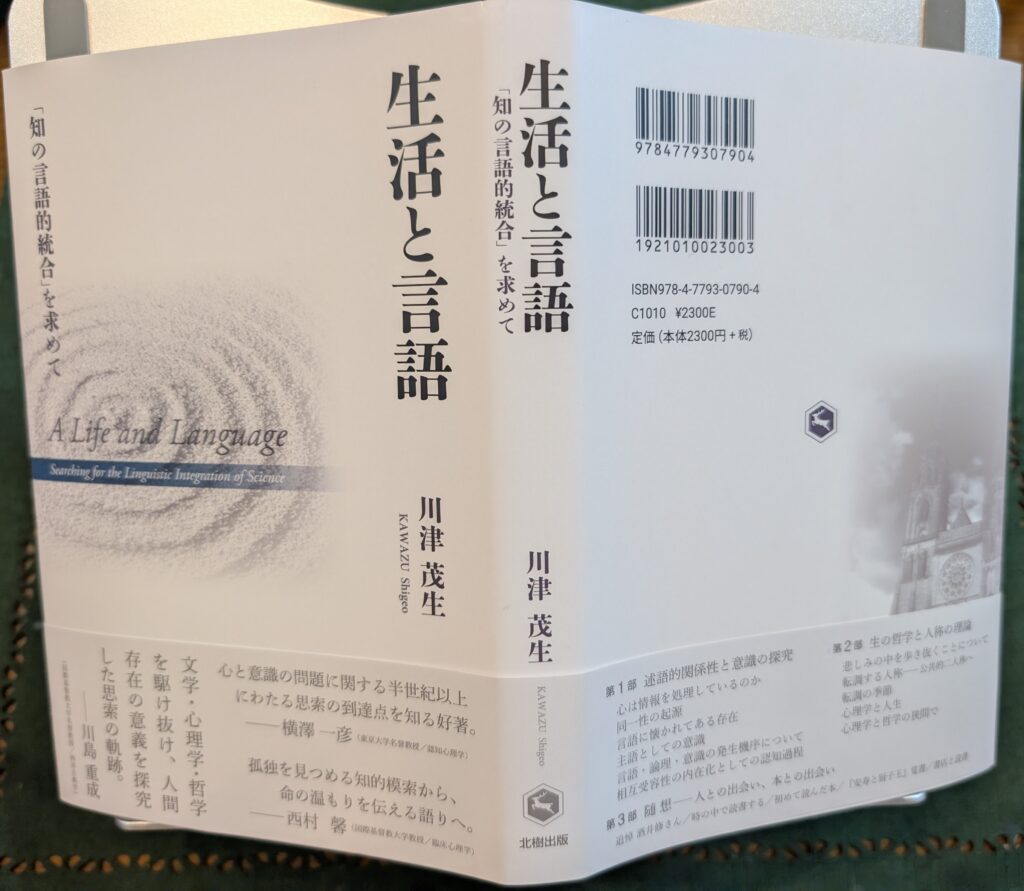
    『生活と言語―「知の言語的統合」を求めて』(北樹出版)
    が発売になりました。

    第2巻『生活と論理―人称のロゴスを求めて』(2020年)から5年の年月が経過し、やっと上梓することができました。

    わたしの哲学的探求は、二人称が人称的対立(一人称 vs. 三人称)の和解となるという発想から始まり、〈二人称―媒介性―受容性―述語性〉という概念連関を辿って、二人称を述語性として読み替えることにより、述語・主語結合が、述語性による主語性の embrace(包容)によって成立するという理解に結実していきました。

    この理解により、主語・述語形式の成立過程が理論的に解明されました。二人称的受容性でもある述語性によって主語が包容されることによって、主語・述語結合が生成されるのです。

    ここで注目すべきことは、述語性による包容とは、慈愛による包容でもあるということです。したがって、述語性によって主語性が包まれるのは、別の表現では、述語性の慈愛によって主語性が包まれ、述語と主語が一体になるということでもあります。

    これによって、主語・述語形式による命題の成立が、たんなるシンタックスの成立ではなく、その自体が慈愛による意味の結晶として成立していると理解することができます。

    こうして、わたしの理論は、論理と意味はもともと一体であり、それらの乖離が本来的ではなかったことを示しました。論理と意味の乖離と関わっていた多くの二元論的な問題が、ここから解決していくのではないかと考えています。

    また、この理解は、脳内の神経回路における情報処理においても当てはまります。それについては、『生活と言語―「知の言語的統合」を求めて』に詳しく記してあります。

    少し、込み入った話になりましたが、この年末年始の時期に、頭の体操とストレッチをするのに役立てていただければ幸いです。

    それでは、みなさま、よい新年をお迎えください。

    ーーーーーーーーーーーーーーー

    At the End of 2025

    【Friday Night Philosophy】

    Good evening, this is Shigeo Kawazu.

    It is now Friday night, December 26th.

    Reflecting on this period as we move from Christmas toward the New Year, I find myself thinking about the fact that this past year has seen far too many deeply painful events unfold around the world.

    This suffering is also the suffering of Christ. Yet, precisely because of this, the faint light of hope is never extinguished, even in the deepest darkness. That is why, even in such a world, we are able to share heartfelt gratitude and joy. I was once again reminded of the true meaning of Christmas.

    Now, in this season of prayer, I have an announcement to make. My new book, A Life and Language: Searching for the Linguistic Integration of Science (Hokuju Shuppan), has officially been released.

    It has been five years since the publication of my second volume, A Life and Logic: Searching for Logos of Grammatical Person (2020), and I am relieved to finally be able to bring this work to you.

    My philosophical inquiry began with the idea that the “second person” serves as a reconciliation of the personal opposition between the first and third persons. By tracing the conceptual chain of <Second Person — Mediation — Receptivity — Predicativity>, and by reinterpreting the second person as “predicativity,” my thought crystallized into an understanding: the union of subject and predicate is established through the embrace of subjectivity by predicativity.

    This understanding theoretically clarifies the formation process of the subject-predicate form. The subject is embraced by predicativity—which is, in essence, second-person receptivity—and through this embrace, the subject-predicate union is generated.

    What is crucial to note here is that this “embrace” by predicativity is also an embrace by compassion (Jiai). Therefore, for subjectivity to be enveloped by predicativity means, in other words, that subjectivity is enveloped by the compassion of predicativity, allowing the predicate and subject to become one.

    Through this lens, we can understand that the establishment of a proposition via the subject-predicate form is not merely the creation of syntax. Rather, it is established as the very crystallization of meaning born from compassion.

    Thus, my theory demonstrates that logic and meaning were originally one, and that their separation was never fundamental. I believe that many dualistic problems associated with the dissociation of logic and meaning can be resolved starting from this point.

    Furthermore, this understanding also applies to information processing within the brain’s neural circuits. I have detailed this aspect in A Life and Language: Searching for the Linguistic Integration of Science.

    This may have been a somewhat complex discussion, but I hope you can use it for a bit of mental gymnastics and intellectual stretching during this holiday season.

    I wish you all a wonderful New Year.

    ーーーーーーーーーーーーーーーーー

    【著書のご案内 / Books】 この記事で触れた理論とエッセイなどの詳細は、以下の三部作にて詳しく展開しています。

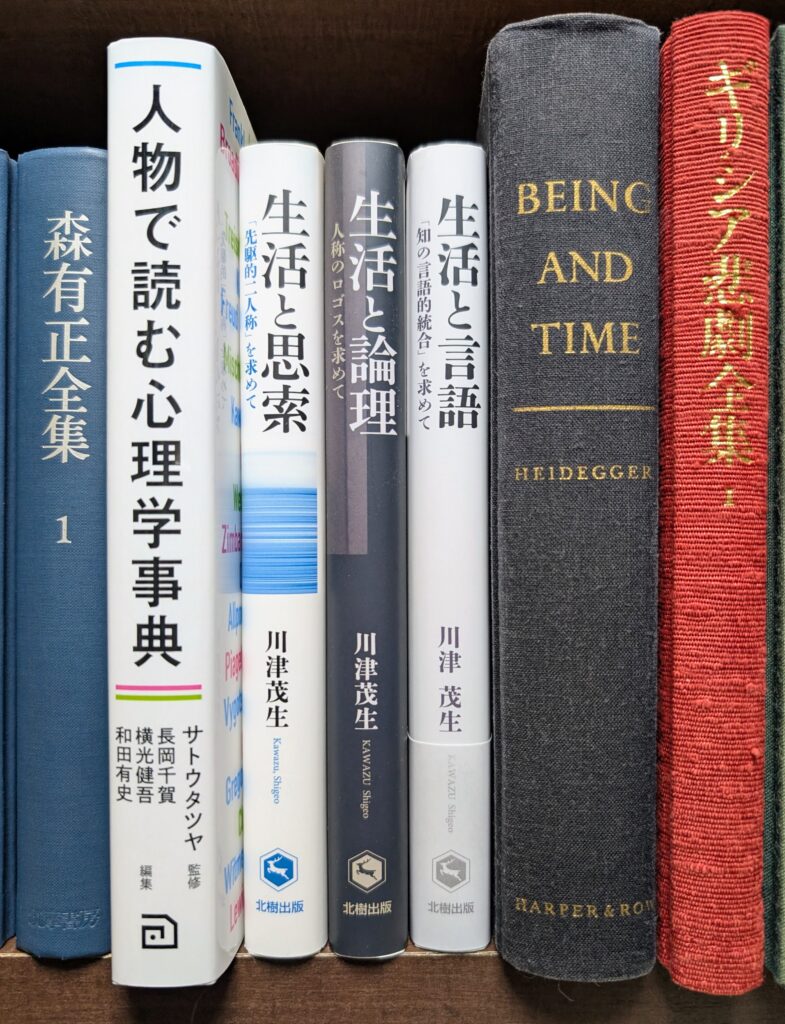
    1. 『生活と思索:「先駆的二人称」を求めて』 (A Life and Meditation: Searching for “Anticipatory Second Person”) [Amazon][楽天]
    2. 『生活と論理: 人称のロゴスを求めて』 (A Life and Logic: Searching for “logos” of Grammatical Person) [Amazon][楽天]
    3. 『生活と言語:「知の言語的統合」を求めて』 (A Life and Language: Searching for the Linguistic Integration of Science) ※予約受付中 [Amazon] [楽天]
  • 脳の〈言葉〉は「存在の棲家」?

    【Friday Night Philosophy 】

    こんばんは、川津茂生です。 12月12日、金曜日の夜になりました。雪の積もり始めた北国は、静寂な夜の帷に包まれています。こんな夜、疲れた脳髄を休めて、ゆっくりと思索するのも悪くありません。ストーブの炎を見つめながら、あるいは両の手に包み込んだ温かい飲み物を啜りながら、「生活と思索」について考えてみましょう。

    さて、前回は、人生と神経回路に訪れる「転調の季節」についてお話ししました。

    私たちの脳の中では、外界から届く情報が受容されます(これは〈三人称→二人称〉の段階)。それから、情報は分散と統合のプロセスを経て、そこに「一人称」が成立します。 このプロセスを、わたしは人称のモードの「転調(Modulation)」として捉えました。

    人生にも、形は違いますが、人称が移り変わる「転調」があるのではないでしょうか。 あたかも音楽が、ふと別の調へと移行するように。

    「時間は、人称を変貌させます」——

    若い頃の、強がりをまとった「一人称」から、弱さと受容による「二人称」へ。 そして、さらなる転調を経て、だれとでも穏やかに理性的に話すことができる大人になる。

    ところで、私たちの脳の内部では何が起きているのでしょうか。外界の三人称の情報は、まず脳に「受け入れられ」(二人称)ます。この段階では、情報はまだ分散していますが、 それが統合されることで「一人称」が生成される。

    この統合に至るまでの一連のプロセスで、脳はまるで作文をしているかのように〈言葉〉を語っているのです。

    ただし、ここで言う〈言葉〉とは、私たちの知っている言語のことではありません。 脳の情報処理そのものが、論理的(Logical)というよりも、むしろ「言語的(Linguistic)=意味生成的」な様式をもっている、という意味です。

    〈言葉〉によって意味が立ち上がる様式が、脳のもっとも基本的な処理過程に備わっているのです。

    ここでわたしは、ハイデガーの「言葉は存在の棲家である」という言葉を思い起こします。

    ハイデガーにとって〈棲家〉とは、存在が開示される場所のことでした。 私たちの神経回路の一連のプロセスが「意味の生成」の場所だとすれば、そこにはー脳という物質の中であるにもかかわらずー「存在が開示される〈言葉〉」があるのかもしれません。

    こんなふうにして、脳科学と現象学の間に橋をかけられるのではないでしょうか。 静寂な雪の夜、そんなことを考えています。

    まもなく書店に並ぶ拙著『生活と言語』には、こうした思索の続きにつながる可能性や、そこから広がりうるさらなる問いが潜んでいます。 この本が、皆さんの脳という「存在が開示される場所」を訪れる日を楽しみにしています。

    続きは、また次回の記事で。 どうぞ、暖かくして良い週末をお過ごしください。

    English Summary

    【Friday Night Philosophy 】Is the Brain’s <Language> the “House of Being”?

    Good evening, this is Shigeo Kawazu. It is Friday night, December 12th. Here in the snowy north, the world is wrapped in the veil of a silent night. On such a night, it is not a bad idea to rest your tired brain and spend a quiet moment reflecting on “life and thought,” perhaps while staring at the flames of the stove or sipping a warm drink cradled in your hands.

    Last time, I spoke about the “season of modulation” that visits both our lives and our neural circuits.

    Inside our brains, information arriving from the outside world is received (this is the <third-person → second-person> stage). Then, through a process of distribution and integration, a “first-person” perspective is established. I have grasped this process as a “Modulation” of the mode of personhood.

    In life as well, although the form differs, isn’t there a similar “modulation” where personhood shifts? Just as music suddenly transitions to a different key.

    Time transforms personhood.

    From the “first-person” of youth, clad in bravado, to the “second-person” of vulnerability and acceptance. And then, through further modulations, one becomes an “adult” capable of speaking calmly and rationally with anyone.

    By the way, what is happening inside our brains during this time? Third-person information from the outside is first “accepted” (second-person) by the brain. At this stage, the information is still distributed, but as it becomes integrated, the “first-person” is generated.

    In this series of processes leading up to integration, the brain speaks “words” as if it were writing a composition.

    However, the “words” mentioned here are not the languages we know. It means that the brain’s information processing itself has a mode that is “Linguistic” (meaning-generating) rather than merely Logical.

    The mode in which meaning arises through <words> is equipped in the brain’s most basic processing mechanism.

    Here, I recall Heidegger’s phrase: “Language is the house of Being.”

    For Heidegger, the <house> was the place where Being is disclosed. If the series of processes in our neural circuits is indeed the locus of “meaning generation,” then perhaps—even within the physical matter of the brain—there exists a <language> where Being is disclosed.

    Perhaps neuroscience and phenomenology can be bridged in this way. On this quiet, snowy night, these are the thoughts drifting through my mind.

    My new book, A Life and Language (Seikatsu to Gengo), which will soon appear in bookstores, holds the potential to continue these reflections and explores further questions that may arise from them. I look forward to the day when this book visits your own “house where Being is disclosed”—your brain.

    More in the next article. Please stay warm and have a restful weekend.

    【著書のご案内 / Books】 この記事で触れた理論とエッセイなどの詳細は、以下の三部作にて詳しく展開しています。

    1. 『生活と思索:「先駆的二人称」を求めて』 (A Life and Meditation: Searching for “Anticipatory Second Person”) [Amazon][楽天]
    2. 『生活と論理: 人称のロゴスを求めて』 (A Life and Logic: Searching for “logos” of Grammatical Person) [Amazon][楽天]
    3. 『生活と言語:「知の言語的統合」を求めて』 (A Life and Language: Searching for the Linguistic Integration of Science) ※予約受付中 [Amazon] [楽天]
  • 人生の「転調」と人称のゆくえ ── 強い「私」から、受容する「あなた」へ 

    【 Friday Night Philosophy 】 ── 生活と思索のクロスオーバー 

    こんばんは、川津茂生です。 12月5日、金曜日の夜。一週間の疲れをほぐす「Friday Night Philosophy」の時間です。 お気に入りのグラス(ビール、あるいは温かいお茶)を片手に、「生活と思索」が交差するこころのストレッチをしてみませんか。 

    さて、前回までは「脳の神経回路」というミクロな世界の話をしてきました。 そこでは、外界の情報(三人称)が、受容され(二人称)、統合されて意識(一人称)になる……という、「時間の流れの中での人称の変化」が起きていました。 

    今夜は、カメラをぐっと引いて、私たちの「人生」という長い時間に焦点を当ててみたいと思います。 

    脳の中で起きていることと同じように、一人の人間が成長し、成熟していくプロセスにおいても、その人の「人称」は、あるときはドラマチックに、またあるときは静かに変貌していくのではないでしょうか。 

    私はそれを、人生の「転調の季節」と呼ぼうと思います。 

    音楽に転調があるように、人生にも、その存在を規定する深い気分が変わっていく時があります。 若い頃の、勢いのある軽やかな気分(長調)が、ある時ふと、重く沈んだ気分(短調)に変わる。 あるいは、深い悲しみの中から、思いがけず静かな安らぎが訪れる。 

    この「気分の転調」の根底で変化しているのは、実は「人称」だと思うのです。 

    • 勢いのある時: 世界を切り拓く「強い一人称(私)」が主役です。 
    • 弱さが訪れた時: 何らかの事情で「私」が弱まった時、私たちは思いがけず、同じように弱さを経験している他者の痛みを受け止める「二人称(あなた・受容性)」へと変貌します。 
    • 成熟した時: それらの変貌を通して、自分の身体や限界を受け入れる「三人称(客観性)」への自覚が深まります。 

    こうして考えると、私の提唱する「一般人称理論」は、一方では「脳のメカニズム」を解き明かし、もう一方では「人生の季節の変化(転調)」を記述するための、共通の羅針盤だったことに気づきます。 

    すべての鍵は、「時間は、人称を変貌させる」という点にあります。 

    この「転調の季節」については、より具体的なエピソードを含めた同じタイトルの講演で詳しく語りました。また看護専門学校でも、それと関連した内容の講義をしました。それらはいずれも、第3巻『生活と言語』に収められています。 (講演と講義の記録ですので、語りかけるような口調を、読みやすいように残してあります) 

    ……と、ここまで書いたところで、ちょうど今、宅配便が届きました。 

    ついに、第3巻『生活と言語』の見本が、十和田の私の手元に到着しました。 

    まだインクの匂いがしそうな、生まれたての一冊です。 この表紙の向こうに、今日お話しした「脳」と「人生」のクロスオーバーが広がっています。 

    詳しくは、また次回の記事で。 良い週末をお過ごしください。 

    [English Summary] Life’s Modulation: From the Strong “I” to the Receptive “You” 

    Friday Night Philosophy — A Crossover of Life and Meditations 

    Previously, I discussed how grammatical persons shift within the micro-world of neural networks. Tonight, let’s zoom out to the macro-world of “Life.” 

    Just as music modulates from a major key to a minor key, our lives experience shifts in deep underlying moods. I call this the “Season of Modulation” (転調の季節). Underneath these shifts lies a transformation of “Grammatical Person”: 

    • Youthful Vigor: The “Strong 1st Person (I)” leads the way. 
    • Times of Weakness: When the “I” is weakened by life’s hardships, we transform into a “2nd Person (You)” capable of accepting the pain of others (Receptivity). 
    • Maturity: Through these changes, we awaken to the “3rd Person (Objectivity),” accepting our physical limits. 

    My theory serves as a compass for both brain mechanisms and life’s seasons. As I write this… a package has just arrived. My new book, A Life and Language, is finally here in my hands. (See photo above) 

    See you at the next “Crossover.” 

    【著書のご案内 / Books】 この記事で触れた理論とエッセイの詳細は、以下の三部作にて詳しく展開しています。

    1. 『生活と思索:「先駆的二人称」を求めて』 (A Life and Meditation: Searching for “Anticipatory Second Person”) [Amazon][楽天]
    2. 『生活と論理: 人称のロゴスを求めて』 (A Life and Logic: Searching for “logos” of Grammatical Person) [Amazon][楽天]
    3. 『生活と言語:「知の言語的統合」を求めて』 (A Life and Language: Searching for the Linguistic Integration of Science) ※予約受付中 [Amazon] [楽天]

  • 神経回路と言語の出会い ─ 脳という「三人称」から「私」が生まれる時 

    【 Friday Night Philosophy 】 ── 生活と思索のクロスオーバー

    こんばんは、川津茂生です。 金曜の夜、一週間の喧騒を忘れて、〈考える自己〉のリラクゼーション・タイムを持ってみませんか。

    前回のブログでは、心と科学の対立を乗り越えるための「一般人称理論」という枠組みについてお話ししました。 本題に入る前に、ひとつ言葉の補足をさせてください。 ここで言う「一般」とは、「世間一般の人(general person)」のことではありません。アインシュタインの「一般相対性理論」と同じく、個々の現象を包括する「人称の一般理論(General Theory)」という意味です。

    さて、そんな抽象的な理論が、私たちの「脳」や「生活」とどう関わるのでしょうか。 今夜は、少し視点を変えて、私たちの「生活の実感」から思索を始めてみましょう。

    私たちは皆、自分の人生を充実させようと一生懸命に生きています(一人称)。 しかし、自分自身がどんなに頑張ってみても、社会や世間(三人称)は、必ずしもそれに呼応してくれるとは限りません。意見が対立し、壁にぶつかることがよくあります。そんな時、ふと訪れる「第三者(二人称)」との出会いが双方の間を取り持ち、思いがけず解決することができた。…… そういった経験はだれにもあるはずです。

    生活の中での「他者を受け入れる存在」すなわち「受容性」との出会い。 実は、これと同じようなことが、私たちの「脳の中」でも起きているとしたら、どうでしょう。

    ここからが、今日の「生活と思索のクロスオーバー」です。

    脳の神経回路には、眼や耳からバラバラな情報(三人称)が入ってきます。 脳はそれの「他なるもの」を、内部へと受け入れます(二人称的な受容)。 そして、受容されたバラバラな情報は統合されて、一つの意味ある世界へとまとめ上げられていきます。

    私は、このプロセスを「脳が〈文〉を作っている」と表現します。 なぜなら、分散した情報(述語的なもの)が、統合されて「私」(主語的なもの)へと変貌していくと理解することができるからですこのような意味では、私たちの神経回路は、電気信号の処理をしているだけでなく、絶えず〈言葉〉を語っているとも言えるのです。

    この理論的な背景については、第3巻『生活と言語』で詳しく論じていますが、私がこの着想に至ったのは、机上の空論からではありません。 看護専門学校での講義で語った「孤独と関わり」の問題、ソフォクレスの悲劇『オイディプス王』などの文学を通して考えた人生行路の紆余曲折の問題、また私自身が経験した人生の生きづらさの問題 …… 。 そうした「生活の場面」に密着した思索があったからこそ、脳内のメカニズムにも、もしかしたら、人生の対立や和解の経験に通底する「受容性」の働きが機能しているのではないかと考えたのです。

    理論は、生活することの中から誕生し、そこで経験する生活の問題やその解決へ向かうプロセスを説明することを通して、考えが醗酵し醸成されていきます。 難しい話になりましたが、皆さんの脳もまた、今この瞬間、世界を受容し、あなたの脳だけの〈文〉を紡いでいるはずです。

    それでは、また次回の生活と思索のクロスオーバーでお会いしましょう。テーマは、著作第3巻でも取り上げた「転調の季節」に関するものにする予定です。


    [English Summary]

    Neural Networks and Language: How the “I” Emerges from the “Third-Person” Brain

    Friday Night PhilosophyA Crossover of Life and Meditations

    In my previous post, I introduced the “General Theory of Grammatical Person” as a framework to bridge the gap between mind and science. To clarify, “General” here does not refer to the “general public,” but rather to a comprehensive theory covering the structure of all grammatical persons, akin to Einstein’s General Theory of Relativity.

    Tonight, let’s connect this abstract theory to our daily lives. In life, when we face conflicts between ourselves (1st person) and society (3rd person), a “second person” (a mediator) often steps in to bridge the gap. This function is what I call “Receptivity.”

    I propose that a similar process occurs within our brains. The brain receives scattered external information (3rd person) through a “second-person-like” receptivity. It then integrates this information, transforming it from a “predicate” state into a “subject” (1st person) state.

    I describe this process as “the brain constructing sentences.” In this sense, our neural networks are not just processing electrical signals; they are constantly speaking “words” to generate consciousness.

    This theory is not mere speculation but is rooted in my personal experiences—teaching nursing on “loneliness and connection,” analyzing the twists and turns of life through Sophocles’ Oedipus Rex, and facing my own hardships. Theory is born from life. By explaining the processes of resolving life’s problems, ideas ferment and mature into a coherent philosophy.

    See you at the next “Crossover.”


    【著書のご案内 / Books】 この記事で触れた理論とエッセイの詳細は、以下の三部作にて詳しく展開しています。

    1. 『生活と思索:「先駆的二人称」を求めて』 (A Life and Meditation: Searching for “Anticipatory Second Person”) [Amazon][楽天]
    2. 『生活と論理: 人称のロゴスを求めて』 (A Life and Logic: Searching for “logos” of Grammatical Person) [Amazon][楽天]
    3. 『生活と言語:「知の言語的統合」を求めて』 (A Life and Language: Searching for the Linguistic Integration of Science) ※予約受付中 [Amazon] [楽天]