タグ: 受容性

  • 脳の〈言葉〉は「存在の棲家」?

    【Friday Night Philosophy 】

    こんばんは、川津茂生です。 12月12日、金曜日の夜になりました。雪の積もり始めた北国は、静寂な夜の帷に包まれています。こんな夜、疲れた脳髄を休めて、ゆっくりと思索するのも悪くありません。ストーブの炎を見つめながら、あるいは両の手に包み込んだ温かい飲み物を啜りながら、「生活と思索」について考えてみましょう。

    さて、前回は、人生と神経回路に訪れる「転調の季節」についてお話ししました。

    私たちの脳の中では、外界から届く情報が受容されます(これは〈三人称→二人称〉の段階)。それから、情報は分散と統合のプロセスを経て、そこに「一人称」が成立します。 このプロセスを、わたしは人称のモードの「転調(Modulation)」として捉えました。

    人生にも、形は違いますが、人称が移り変わる「転調」があるのではないでしょうか。 あたかも音楽が、ふと別の調へと移行するように。

    「時間は、人称を変貌させます」——

    若い頃の、強がりをまとった「一人称」から、弱さと受容による「二人称」へ。 そして、さらなる転調を経て、だれとでも穏やかに理性的に話すことができる大人になる。

    ところで、私たちの脳の内部では何が起きているのでしょうか。外界の三人称の情報は、まず脳に「受け入れられ」(二人称)ます。この段階では、情報はまだ分散していますが、 それが統合されることで「一人称」が生成される。

    この統合に至るまでの一連のプロセスで、脳はまるで作文をしているかのように〈言葉〉を語っているのです。

    ただし、ここで言う〈言葉〉とは、私たちの知っている言語のことではありません。 脳の情報処理そのものが、論理的(Logical)というよりも、むしろ「言語的(Linguistic)=意味生成的」な様式をもっている、という意味です。

    〈言葉〉によって意味が立ち上がる様式が、脳のもっとも基本的な処理過程に備わっているのです。

    ここでわたしは、ハイデガーの「言葉は存在の棲家である」という言葉を思い起こします。

    ハイデガーにとって〈棲家〉とは、存在が開示される場所のことでした。 私たちの神経回路の一連のプロセスが「意味の生成」の場所だとすれば、そこにはー脳という物質の中であるにもかかわらずー「存在が開示される〈言葉〉」があるのかもしれません。

    こんなふうにして、脳科学と現象学の間に橋をかけられるのではないでしょうか。 静寂な雪の夜、そんなことを考えています。

    まもなく書店に並ぶ拙著『生活と言語』には、こうした思索の続きにつながる可能性や、そこから広がりうるさらなる問いが潜んでいます。 この本が、皆さんの脳という「存在が開示される場所」を訪れる日を楽しみにしています。

    続きは、また次回の記事で。 どうぞ、暖かくして良い週末をお過ごしください。

    English Summary

    【Friday Night Philosophy 】Is the Brain’s <Language> the “House of Being”?

    Good evening, this is Shigeo Kawazu. It is Friday night, December 12th. Here in the snowy north, the world is wrapped in the veil of a silent night. On such a night, it is not a bad idea to rest your tired brain and spend a quiet moment reflecting on “life and thought,” perhaps while staring at the flames of the stove or sipping a warm drink cradled in your hands.

    Last time, I spoke about the “season of modulation” that visits both our lives and our neural circuits.

    Inside our brains, information arriving from the outside world is received (this is the <third-person → second-person> stage). Then, through a process of distribution and integration, a “first-person” perspective is established. I have grasped this process as a “Modulation” of the mode of personhood.

    In life as well, although the form differs, isn’t there a similar “modulation” where personhood shifts? Just as music suddenly transitions to a different key.

    Time transforms personhood.

    From the “first-person” of youth, clad in bravado, to the “second-person” of vulnerability and acceptance. And then, through further modulations, one becomes an “adult” capable of speaking calmly and rationally with anyone.

    By the way, what is happening inside our brains during this time? Third-person information from the outside is first “accepted” (second-person) by the brain. At this stage, the information is still distributed, but as it becomes integrated, the “first-person” is generated.

    In this series of processes leading up to integration, the brain speaks “words” as if it were writing a composition.

    However, the “words” mentioned here are not the languages we know. It means that the brain’s information processing itself has a mode that is “Linguistic” (meaning-generating) rather than merely Logical.

    The mode in which meaning arises through <words> is equipped in the brain’s most basic processing mechanism.

    Here, I recall Heidegger’s phrase: “Language is the house of Being.”

    For Heidegger, the <house> was the place where Being is disclosed. If the series of processes in our neural circuits is indeed the locus of “meaning generation,” then perhaps—even within the physical matter of the brain—there exists a <language> where Being is disclosed.

    Perhaps neuroscience and phenomenology can be bridged in this way. On this quiet, snowy night, these are the thoughts drifting through my mind.

    My new book, A Life and Language (Seikatsu to Gengo), which will soon appear in bookstores, holds the potential to continue these reflections and explores further questions that may arise from them. I look forward to the day when this book visits your own “house where Being is disclosed”—your brain.

    More in the next article. Please stay warm and have a restful weekend.

    【著書のご案内 / Books】 この記事で触れた理論とエッセイなどの詳細は、以下の三部作にて詳しく展開しています。

    1. 『生活と思索:「先駆的二人称」を求めて』 (A Life and Meditation: Searching for “Anticipatory Second Person”) [Amazon][楽天]
    2. 『生活と論理: 人称のロゴスを求めて』 (A Life and Logic: Searching for “logos” of Grammatical Person) [Amazon][楽天]
    3. 『生活と言語:「知の言語的統合」を求めて』 (A Life and Language: Searching for the Linguistic Integration of Science) ※予約受付中 [Amazon] [楽天]
  • 人生の「転調」と人称のゆくえ ── 強い「私」から、受容する「あなた」へ 

    【 Friday Night Philosophy 】 ── 生活と思索のクロスオーバー 

    こんばんは、川津茂生です。 12月5日、金曜日の夜。一週間の疲れをほぐす「Friday Night Philosophy」の時間です。 お気に入りのグラス(ビール、あるいは温かいお茶)を片手に、「生活と思索」が交差するこころのストレッチをしてみませんか。 

    さて、前回までは「脳の神経回路」というミクロな世界の話をしてきました。 そこでは、外界の情報(三人称)が、受容され(二人称)、統合されて意識(一人称)になる……という、「時間の流れの中での人称の変化」が起きていました。 

    今夜は、カメラをぐっと引いて、私たちの「人生」という長い時間に焦点を当ててみたいと思います。 

    脳の中で起きていることと同じように、一人の人間が成長し、成熟していくプロセスにおいても、その人の「人称」は、あるときはドラマチックに、またあるときは静かに変貌していくのではないでしょうか。 

    私はそれを、人生の「転調の季節」と呼ぼうと思います。 

    音楽に転調があるように、人生にも、その存在を規定する深い気分が変わっていく時があります。 若い頃の、勢いのある軽やかな気分(長調)が、ある時ふと、重く沈んだ気分(短調)に変わる。 あるいは、深い悲しみの中から、思いがけず静かな安らぎが訪れる。 

    この「気分の転調」の根底で変化しているのは、実は「人称」だと思うのです。 

    • 勢いのある時: 世界を切り拓く「強い一人称(私)」が主役です。 
    • 弱さが訪れた時: 何らかの事情で「私」が弱まった時、私たちは思いがけず、同じように弱さを経験している他者の痛みを受け止める「二人称(あなた・受容性)」へと変貌します。 
    • 成熟した時: それらの変貌を通して、自分の身体や限界を受け入れる「三人称(客観性)」への自覚が深まります。 

    こうして考えると、私の提唱する「一般人称理論」は、一方では「脳のメカニズム」を解き明かし、もう一方では「人生の季節の変化(転調)」を記述するための、共通の羅針盤だったことに気づきます。 

    すべての鍵は、「時間は、人称を変貌させる」という点にあります。 

    この「転調の季節」については、より具体的なエピソードを含めた同じタイトルの講演で詳しく語りました。また看護専門学校でも、それと関連した内容の講義をしました。それらはいずれも、第3巻『生活と言語』に収められています。 (講演と講義の記録ですので、語りかけるような口調を、読みやすいように残してあります) 

    ……と、ここまで書いたところで、ちょうど今、宅配便が届きました。 

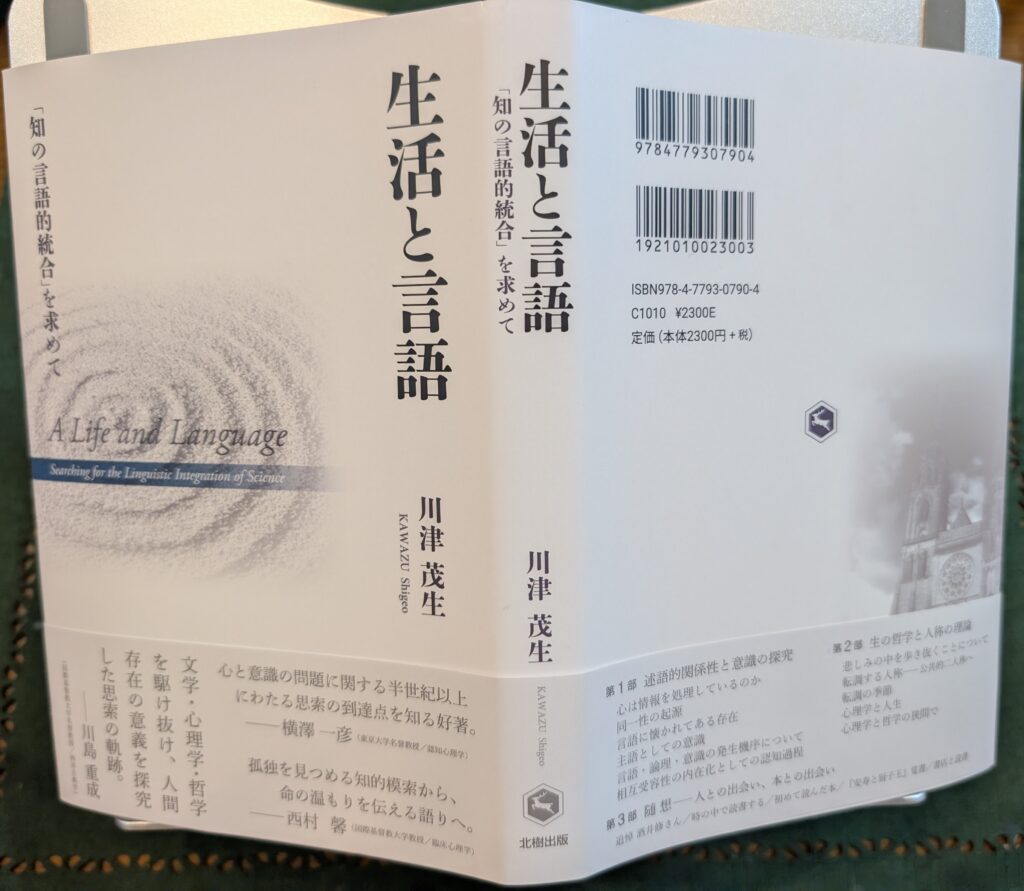
    ついに、第3巻『生活と言語』の見本が、十和田の私の手元に到着しました。 

    まだインクの匂いがしそうな、生まれたての一冊です。 この表紙の向こうに、今日お話しした「脳」と「人生」のクロスオーバーが広がっています。 

    詳しくは、また次回の記事で。 良い週末をお過ごしください。 

    [English Summary] Life’s Modulation: From the Strong “I” to the Receptive “You” 

    Friday Night Philosophy — A Crossover of Life and Meditations 

    Previously, I discussed how grammatical persons shift within the micro-world of neural networks. Tonight, let’s zoom out to the macro-world of “Life.” 

    Just as music modulates from a major key to a minor key, our lives experience shifts in deep underlying moods. I call this the “Season of Modulation” (転調の季節). Underneath these shifts lies a transformation of “Grammatical Person”: 

    • Youthful Vigor: The “Strong 1st Person (I)” leads the way. 
    • Times of Weakness: When the “I” is weakened by life’s hardships, we transform into a “2nd Person (You)” capable of accepting the pain of others (Receptivity). 
    • Maturity: Through these changes, we awaken to the “3rd Person (Objectivity),” accepting our physical limits. 

    My theory serves as a compass for both brain mechanisms and life’s seasons. As I write this… a package has just arrived. My new book, A Life and Language, is finally here in my hands. (See photo above) 

    See you at the next “Crossover.” 

    【著書のご案内 / Books】 この記事で触れた理論とエッセイの詳細は、以下の三部作にて詳しく展開しています。

    1. 『生活と思索:「先駆的二人称」を求めて』 (A Life and Meditation: Searching for “Anticipatory Second Person”) [Amazon][楽天]
    2. 『生活と論理: 人称のロゴスを求めて』 (A Life and Logic: Searching for “logos” of Grammatical Person) [Amazon][楽天]
    3. 『生活と言語:「知の言語的統合」を求めて』 (A Life and Language: Searching for the Linguistic Integration of Science) ※予約受付中 [Amazon] [楽天]

  • 神経回路と言語の出会い ─ 脳という「三人称」から「私」が生まれる時 

    【 Friday Night Philosophy 】 ── 生活と思索のクロスオーバー

    こんばんは、川津茂生です。 金曜の夜、一週間の喧騒を忘れて、〈考える自己〉のリラクゼーション・タイムを持ってみませんか。

    前回のブログでは、心と科学の対立を乗り越えるための「一般人称理論」という枠組みについてお話ししました。 本題に入る前に、ひとつ言葉の補足をさせてください。 ここで言う「一般」とは、「世間一般の人(general person)」のことではありません。アインシュタインの「一般相対性理論」と同じく、個々の現象を包括する「人称の一般理論(General Theory)」という意味です。

    さて、そんな抽象的な理論が、私たちの「脳」や「生活」とどう関わるのでしょうか。 今夜は、少し視点を変えて、私たちの「生活の実感」から思索を始めてみましょう。

    私たちは皆、自分の人生を充実させようと一生懸命に生きています(一人称)。 しかし、自分自身がどんなに頑張ってみても、社会や世間(三人称)は、必ずしもそれに呼応してくれるとは限りません。意見が対立し、壁にぶつかることがよくあります。そんな時、ふと訪れる「第三者(二人称)」との出会いが双方の間を取り持ち、思いがけず解決することができた。…… そういった経験はだれにもあるはずです。

    生活の中での「他者を受け入れる存在」すなわち「受容性」との出会い。 実は、これと同じようなことが、私たちの「脳の中」でも起きているとしたら、どうでしょう。

    ここからが、今日の「生活と思索のクロスオーバー」です。

    脳の神経回路には、眼や耳からバラバラな情報(三人称)が入ってきます。 脳はそれの「他なるもの」を、内部へと受け入れます(二人称的な受容)。 そして、受容されたバラバラな情報は統合されて、一つの意味ある世界へとまとめ上げられていきます。

    私は、このプロセスを「脳が〈文〉を作っている」と表現します。 なぜなら、分散した情報(述語的なもの)が、統合されて「私」(主語的なもの)へと変貌していくと理解することができるからですこのような意味では、私たちの神経回路は、電気信号の処理をしているだけでなく、絶えず〈言葉〉を語っているとも言えるのです。

    この理論的な背景については、第3巻『生活と言語』で詳しく論じていますが、私がこの着想に至ったのは、机上の空論からではありません。 看護専門学校での講義で語った「孤独と関わり」の問題、ソフォクレスの悲劇『オイディプス王』などの文学を通して考えた人生行路の紆余曲折の問題、また私自身が経験した人生の生きづらさの問題 …… 。 そうした「生活の場面」に密着した思索があったからこそ、脳内のメカニズムにも、もしかしたら、人生の対立や和解の経験に通底する「受容性」の働きが機能しているのではないかと考えたのです。

    理論は、生活することの中から誕生し、そこで経験する生活の問題やその解決へ向かうプロセスを説明することを通して、考えが醗酵し醸成されていきます。 難しい話になりましたが、皆さんの脳もまた、今この瞬間、世界を受容し、あなたの脳だけの〈文〉を紡いでいるはずです。

    それでは、また次回の生活と思索のクロスオーバーでお会いしましょう。テーマは、著作第3巻でも取り上げた「転調の季節」に関するものにする予定です。


    [English Summary]

    Neural Networks and Language: How the “I” Emerges from the “Third-Person” Brain

    Friday Night PhilosophyA Crossover of Life and Meditations

    In my previous post, I introduced the “General Theory of Grammatical Person” as a framework to bridge the gap between mind and science. To clarify, “General” here does not refer to the “general public,” but rather to a comprehensive theory covering the structure of all grammatical persons, akin to Einstein’s General Theory of Relativity.

    Tonight, let’s connect this abstract theory to our daily lives. In life, when we face conflicts between ourselves (1st person) and society (3rd person), a “second person” (a mediator) often steps in to bridge the gap. This function is what I call “Receptivity.”

    I propose that a similar process occurs within our brains. The brain receives scattered external information (3rd person) through a “second-person-like” receptivity. It then integrates this information, transforming it from a “predicate” state into a “subject” (1st person) state.

    I describe this process as “the brain constructing sentences.” In this sense, our neural networks are not just processing electrical signals; they are constantly speaking “words” to generate consciousness.

    This theory is not mere speculation but is rooted in my personal experiences—teaching nursing on “loneliness and connection,” analyzing the twists and turns of life through Sophocles’ Oedipus Rex, and facing my own hardships. Theory is born from life. By explaining the processes of resolving life’s problems, ideas ferment and mature into a coherent philosophy.

    See you at the next “Crossover.”


    【著書のご案内 / Books】 この記事で触れた理論とエッセイの詳細は、以下の三部作にて詳しく展開しています。

    1. 『生活と思索:「先駆的二人称」を求めて』 (A Life and Meditation: Searching for “Anticipatory Second Person”) [Amazon][楽天]
    2. 『生活と論理: 人称のロゴスを求めて』 (A Life and Logic: Searching for “logos” of Grammatical Person) [Amazon][楽天]
    3. 『生活と言語:「知の言語的統合」を求めて』 (A Life and Language: Searching for the Linguistic Integration of Science) ※予約受付中 [Amazon] [楽天]

  • Receptivity について

    receptivityは、「受容性」あるいは「感受性」と翻訳できる。英語のreceptivityは、receiveと同じ語源の言葉であるから、「受け取る」「受理する」「受ける」「経験する」「応じる」などの意味で理解されている(研究社英和中辞典第6版による)。語源は、ラテン語のrecipere「再び取る、受け取る、受け入れる」である。

    わたしがrecipereを語源とする言葉に注目し関心をもったのは、北米に留学して、心理学を学び始めたころである。わたしは、1980年から2年半在学したWest Virginia Universityで、心理学を専攻した。それ以前に、日本の大学では心理学の授業をとったことがなかったので、学部の心理学入門から順番に受講した。その中には、感覚と知覚、生理学的心理学の授業もあった。

    それらを受講して、視覚や聴覚などの感覚刺激を受容する細胞を、英語ではsensory receptorsと呼ぶ。これは日本語では感覚受容器と呼ばれるので、たいへん硬い言葉に聞こえる。日本語の感じとしては、感覚刺激を受容する生物学的な機器のようなものをイメージする人も多いであろう。そういったイメージは間違いではなく、まさにその通りなのである。しかし、わたしはなぜかこれが英語ではreceptorsと呼ばれているということに対して、一種の共感に近い感覚をもったのである。

    その感情を解き明かしてみると、やはり生命が、刺激をたんに機械的に受容するかたちで処理しているという、味気ない事態ではなく、なにかもっと生命的な、他なるものを受容するあるいは受け入れるといった、主観性あるいは精神性に近いものを、この言葉に読み込みたいという、感傷的な思いがあったと言えるだろう。しかし実際には、例えば光を受容する網膜の細胞では、そんな感傷的なことは起こっていない。桿体や錐体と呼ばれる視細胞は、光を吸収すると、細胞内で一連の化学反応が生じ、それによって細胞の膜電位が過分極を起こす。それが視細胞からの信号となって視神経を通過して脳内へと送られる。そのどこをみても、物質的なレベルで解析できるメカニカルな事象が継起しているだけである。それが充分わかっていても、生命が何かを受容する最初のステップとして、sensory receptorsにおいても、何らかの生命的なものが在るような、というよりあってほしいような思いがあった。

    多くの心理学者は、このような感傷的な思いに対して、それは科学的な研究の妨げになるだけだと言うだろう。じっさい客観的で科学的な研究をしているときに、データにしろ初期のメカニズムにしろ、そこに何らかの主観性に近い、いわばスピリチュアルなものを読み込んでしまったら、その時点で、科学的探究は失敗だと言わざるを得ないのである。

    receptorsあるいはreceptivtiyについての、わたしの考えの変遷がその後どのような経過を辿ったかは省略するが、現在のわたしの考えは次のようなものである。それは、受容性の概念に、連続性をもったスペクトラムの考え方を導入してみるのである。結論からいうと、受容性にはスペクトラムがあり、その一方の端では、完全に物質的でメカニカルな受容がなされているが、その反対の端では、主観性をもった他者の受け入れとすら呼べるような受容性が生じている、と理解するのである。

    このような連続性をもったスペクトラムを考えてみても、そのスペクトラムのどこか途中で、物質的なものが主観性に重心を移動するなどということは、通常理解しにくいことである。このようなスペクトラムが主観性への階梯を順次登っていくようなメカニズムはいったいあるのだろうか。その答えとして、わたしは、並列分散処理において、条件付き確立によって一つ上の層へと推論の処理が進行するたびに、そこで働いている一定の小さな自由度が、処理が重層化にするにつれて自由度も重層化することによって、かなりの自由度を保持した主観性に近いものへと成長していくのではないか、と想定している。

    この並列分散処理の重層的高次化が、別の項目でも指摘したように、述語的なものが主語的なものによって統合されるというプロセスの重層化でもあることを踏まえると、主語の高次化によりかなりの自由度をもった主語=主観が成長してくるという想定も可能となる。

    説明が駆け足なので、分かりにくいとは思う。しかし以上のような理論的背景により、わたしは今でも、receptivityが最初の段階では主観性をもっていないとしても、順次脳内での処理の重層化によって主観性が生成されるとすれば、そこに上述のような連続したスペクトラムを見ることは、あながち間違いとは言えないと考えるのである。

    このようにして、わたしが1980年に、receptorsという言葉に抱いたロマンは今も生きている。

    ここで紹介してたわたしの理論については、この秋出版予定の『生活と言語』(北樹出版)に詳しく述べてある。


    English Summary:

    On the Concept of Receptivity

    I explore the concept of receptivity, tracing my interest back to my time studying psychology in the U.S. in the 1980s. While taking courses on sensation and perception, I was struck by the term “sensory receptors,” which refers to the cells that receive stimuli like light and sound.

    Despite knowing that these receptors function in a purely mechanical way—for example, retinal cells undergoing chemical reactions to absorb light—I felt a romantic connection to the term, hoping it implied something more vital or subjective than a simple mechanical process. I acknowledged that this sentiment runs counter to scientific objectivity, as interpreting spiritual or subjective elements into data would undermine a scientific approach.

    My current, more evolved view on receptivity is that there is a spectrum of receptivity where one end is purely mechanical, and the other end involves a more subjective form of reception, like the acceptance of another person. This transition might occur, as parallel distributed processing moves to higher layers, and a small degree of freedom at each level builds up. This “layering of freedom” could lead to the emergence of subjectivity, which I see as a sophisticated, higher-order subject integrating predicates.

    I argue that the initial, mechanical receptivity can progressively generate subjectivity through the brain’s layered processing. The initial “romantic” feeling I had about the term “receptors” in 1980 is still alive in this more refined philosophical model.