タグ: 哲学

  • 『生活と言語』の中心的な考え

    【Friday Night Philosophy 】

    Friday Night Philosophy を久しぶりに再開します。

    今回は、拙著『生活と言語』の中心的な考えについて、比較的わかりやすく書いた文章がありますので、それを引用しながら、ごく簡単に触れてみたいと思います。

    この文章は、ペディラヴィウム会(会のURL)からいただいた出版助成へのお礼の言葉として執筆したものです。

    【寄稿文引用】

    『生活と言語』の出版にあたって

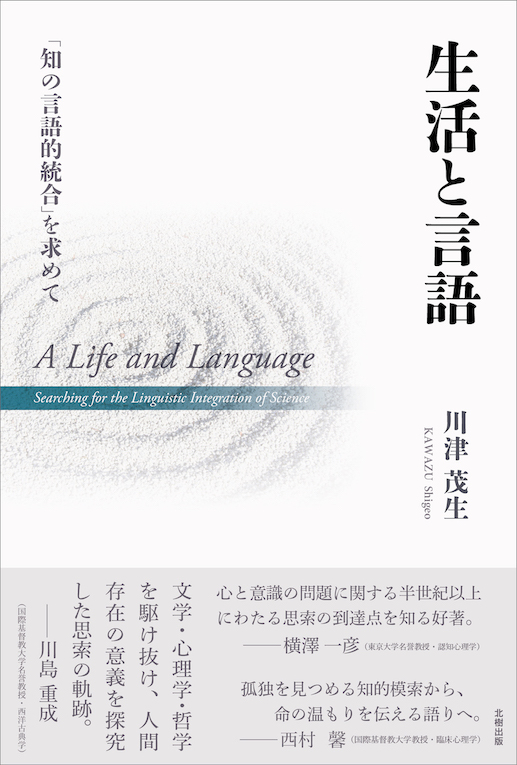
    拙著『生活と言語―「知の言語的統合」を求めて』(北樹出版、2025年)の出版にあたり、ペディラヴィウム会より出版助成を頂きました。ここに、感謝の思いを述べさせて頂きたく存じます。

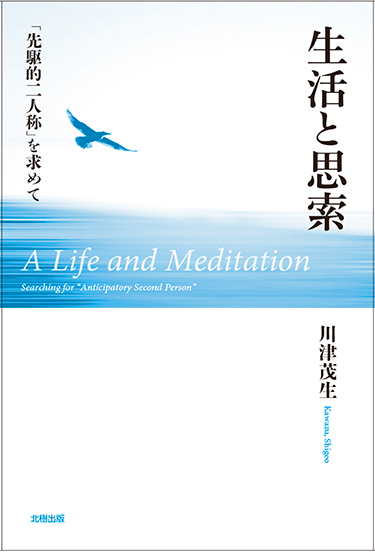
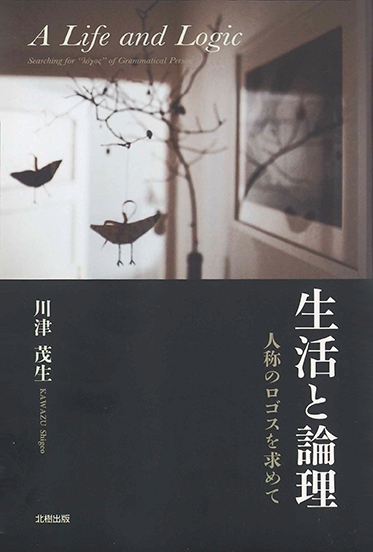
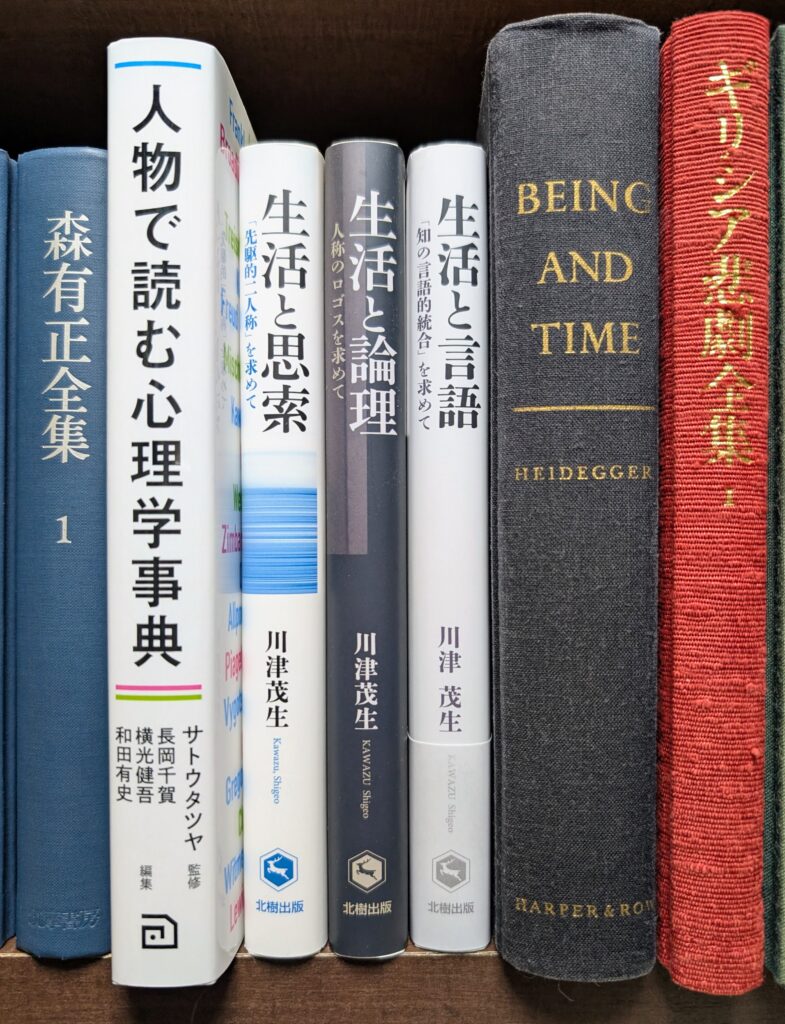
    本書は、前二著『生活と思索―「先駆的二人称」を求めて』(2017年)、『生活と論理―人称のロゴスを求めて』(2020年)に続く第三巻です。全三巻を通して、意識の問題を心理学と哲学の立場から学際的な手法で探究してきました。

    探究の出発点には、ICUで川島重成先生から学んだ、ギリシア古典世界における「パトスからロゴスへと展開する精神のダイナミズム」の理解がありました。これは生活におけるパトス的なものからロゴス的なものが成長するという根本的な洞察であり、私の理論的考察の根幹をなしています。

    通常、認知心理学では「検出された特徴が統合されて対象の知覚が成立する」とされます。しかし、私は「特徴がまず述語として受容され、それが統合されて主語的表現となる」と考えました。パトス的な述語性が、主語的統合によってロゴス化されるのです。脳の神経回路は計算をしているというより、むしろ、あたかも詩人がパトスからロゴスを紡ぎ出すように知覚像を描いているのです。

    この理論によって、計算理論に基づく認知の理解を、パトスとロゴスのダイナミズムとして重ね合わせることができました。これは、私がICUで西洋古典学を中心に学んだ背景がなければ到達できなかった地点だと思います。

    (「ペディラヴィウム会通信 48号」 p.67-68., 2026 より抜粋・構成)

    【解説と結び】

    ここで述べたことは、『生活と言語』全体の中核に関わる考え方です。 重要な点は、従来「特徴が統合されて表象が成立する」とされてきた認知過程を、「まず述語的な受容があり、それが主語的表現に統合される」として捉え直すことです。

    この「述語から主語へ」という方向性は、生活の中のパトス的なものがロゴス化されていく過程と類比的に対応しています。本書では、この考え方をさらに展開し、意識や認知の問題を心理学と哲学の両面から探究しています。

    詳細については、ぜひ書籍を手に取ってご覧いただければ幸いです。

    • 『生活と言語―「知の言語的統合」を求めて』(北樹出版)  (北樹出版URL)     

    【付記:新刊のお知らせ】

    なお、著者の普段の思索をまとめたエッセイ集を、先日Kindle Direct Publishing(KDP)より刊行しました、『空の記憶:空と人生をめぐる随想』(The Sky of Life: Reflections on Time, Memory, and the Sky (English version)です。

    こちらでは、上述した理論的な探究とは対照的に、私の日常の思索を内省的な随想のかたちで語りました。空を見上げつつ生きる人生を綴った、もうひとつの「思索の記録」です。

    English Summary: From Pathos to Logos

    In my latest book, Life and Language, I explore the dynamism of consciousness by integrating psychology and philosophy.

    Contrary to conventional cognitive theories where “integrated features form an object,” I propose that “predicative reception precedes subjective integration.” This means our neural circuits do not merely perform “computations”; rather, they depict our perception much like a poet weaving logos (logic/word) out of pathos (emotion/experience). This transition from the “predicative” to the “subjective” reflects the fundamental process of how our lived experience acquires meaning.

    • Main Work: A Life and Language: Searching for the Linguistic Integration of Science (Hokuju Shuppan, 2025)
    • New Release: The Sky of Life: Reflections on Time, Memory, and theSky (KDP, 2026) — A more introspective and personal collection of essays. [Amazon.com/Amazon.co.jp] 


  • 第24回「注意と認知」研究会で配布したハンドアウト

    名古屋で開催された第24回「注意と認知」研究会(2026年3月8日〜10日)で、「認知過程における情報の分散と統合の反復モデル」と題して、発表を行いました。発表予稿は下のURLからアクセスできます。

    認知過程における情報の分散と統合の反復モデル

    この発表では、当日プリントしたハンドアウトを配布しました。そのハンドアウトを以下に公開します。

    本ハンドアウトは暫定的なものです。

    English Summary

    This handout was prepared for a presentation at the workshop on Attention and Cognition (Nagoya, March 9, 2026).
    It is provisional and reflects my current line of thought.

    The presentation addresses the problem of how a unified “subject” (first-person perspective) emerges from distributed information processing in the brain, a question that remains unresolved within standard parallel distributed processing (PDP) models.

    I propose to reinterpret cognitive processes as a dynamic repetition of dispersion and integration of information, and to formalize this process using the concept of a meta-attractor. While conventional attractors account for convergence toward specific representations (e.g., recognizing an object), they cannot explain the persistent form of “being experienced by me.”

    The meta-attractor is not a convergence point toward a particular content, but a higher-order dynamical stability that sustains the iterative process itself. It provides a global structure within which dispersion and integration can continue without collapsing into chaos, thereby generating a stable first-person structure.

    Within this framework, distributed processing corresponds to a predicative (second-person-like) phase of receptivity, while integration corresponds to the emergence of subjectivity. The subject is not presupposed but arises retrospectively as a structural center of this dynamic process.

    This model also suggests a new dynamical perspective on psychopathology, where disturbances of selfhood may be understood as instabilities in the formation or maintenance of the meta-attractor.

    Philosophically, the model resonates with Quine’s holism and offers a naturalized account of transcendental subjectivity, describing the “conditions of possibility” of experience in dynamical and cognitive-scientific terms.

    (This handout is provisional and is shared here for further development and discussion.)

  • 脳の〈言葉〉は「存在の棲家」?

    【Friday Night Philosophy 】

    こんばんは、川津茂生です。 12月12日、金曜日の夜になりました。雪の積もり始めた北国は、静寂な夜の帷に包まれています。こんな夜、疲れた脳髄を休めて、ゆっくりと思索するのも悪くありません。ストーブの炎を見つめながら、あるいは両の手に包み込んだ温かい飲み物を啜りながら、「生活と思索」について考えてみましょう。

    さて、前回は、人生と神経回路に訪れる「転調の季節」についてお話ししました。

    私たちの脳の中では、外界から届く情報が受容されます(これは〈三人称→二人称〉の段階)。それから、情報は分散と統合のプロセスを経て、そこに「一人称」が成立します。 このプロセスを、わたしは人称のモードの「転調(Modulation)」として捉えました。

    人生にも、形は違いますが、人称が移り変わる「転調」があるのではないでしょうか。 あたかも音楽が、ふと別の調へと移行するように。

    「時間は、人称を変貌させます」——

    若い頃の、強がりをまとった「一人称」から、弱さと受容による「二人称」へ。 そして、さらなる転調を経て、だれとでも穏やかに理性的に話すことができる大人になる。

    ところで、私たちの脳の内部では何が起きているのでしょうか。外界の三人称の情報は、まず脳に「受け入れられ」(二人称)ます。この段階では、情報はまだ分散していますが、 それが統合されることで「一人称」が生成される。

    この統合に至るまでの一連のプロセスで、脳はまるで作文をしているかのように〈言葉〉を語っているのです。

    ただし、ここで言う〈言葉〉とは、私たちの知っている言語のことではありません。 脳の情報処理そのものが、論理的(Logical)というよりも、むしろ「言語的(Linguistic)=意味生成的」な様式をもっている、という意味です。

    〈言葉〉によって意味が立ち上がる様式が、脳のもっとも基本的な処理過程に備わっているのです。

    ここでわたしは、ハイデガーの「言葉は存在の棲家である」という言葉を思い起こします。

    ハイデガーにとって〈棲家〉とは、存在が開示される場所のことでした。 私たちの神経回路の一連のプロセスが「意味の生成」の場所だとすれば、そこにはー脳という物質の中であるにもかかわらずー「存在が開示される〈言葉〉」があるのかもしれません。

    こんなふうにして、脳科学と現象学の間に橋をかけられるのではないでしょうか。 静寂な雪の夜、そんなことを考えています。

    まもなく書店に並ぶ拙著『生活と言語』には、こうした思索の続きにつながる可能性や、そこから広がりうるさらなる問いが潜んでいます。 この本が、皆さんの脳という「存在が開示される場所」を訪れる日を楽しみにしています。

    続きは、また次回の記事で。 どうぞ、暖かくして良い週末をお過ごしください。

    English Summary

    【Friday Night Philosophy 】Is the Brain’s <Language> the “House of Being”?

    Good evening, this is Shigeo Kawazu. It is Friday night, December 12th. Here in the snowy north, the world is wrapped in the veil of a silent night. On such a night, it is not a bad idea to rest your tired brain and spend a quiet moment reflecting on “life and thought,” perhaps while staring at the flames of the stove or sipping a warm drink cradled in your hands.

    Last time, I spoke about the “season of modulation” that visits both our lives and our neural circuits.

    Inside our brains, information arriving from the outside world is received (this is the <third-person → second-person> stage). Then, through a process of distribution and integration, a “first-person” perspective is established. I have grasped this process as a “Modulation” of the mode of personhood.

    In life as well, although the form differs, isn’t there a similar “modulation” where personhood shifts? Just as music suddenly transitions to a different key.

    Time transforms personhood.

    From the “first-person” of youth, clad in bravado, to the “second-person” of vulnerability and acceptance. And then, through further modulations, one becomes an “adult” capable of speaking calmly and rationally with anyone.

    By the way, what is happening inside our brains during this time? Third-person information from the outside is first “accepted” (second-person) by the brain. At this stage, the information is still distributed, but as it becomes integrated, the “first-person” is generated.

    In this series of processes leading up to integration, the brain speaks “words” as if it were writing a composition.

    However, the “words” mentioned here are not the languages we know. It means that the brain’s information processing itself has a mode that is “Linguistic” (meaning-generating) rather than merely Logical.

    The mode in which meaning arises through <words> is equipped in the brain’s most basic processing mechanism.

    Here, I recall Heidegger’s phrase: “Language is the house of Being.”

    For Heidegger, the <house> was the place where Being is disclosed. If the series of processes in our neural circuits is indeed the locus of “meaning generation,” then perhaps—even within the physical matter of the brain—there exists a <language> where Being is disclosed.

    Perhaps neuroscience and phenomenology can be bridged in this way. On this quiet, snowy night, these are the thoughts drifting through my mind.

    My new book, A Life and Language (Seikatsu to Gengo), which will soon appear in bookstores, holds the potential to continue these reflections and explores further questions that may arise from them. I look forward to the day when this book visits your own “house where Being is disclosed”—your brain.

    More in the next article. Please stay warm and have a restful weekend.

    【著書のご案内 / Books】 この記事で触れた理論とエッセイなどの詳細は、以下の三部作にて詳しく展開しています。

    1. 『生活と思索:「先駆的二人称」を求めて』 (A Life and Meditation: Searching for “Anticipatory Second Person”) [Amazon][楽天]
    2. 『生活と論理: 人称のロゴスを求めて』 (A Life and Logic: Searching for “logos” of Grammatical Person) [Amazon][楽天]
    3. 『生活と言語:「知の言語的統合」を求めて』 (A Life and Language: Searching for the Linguistic Integration of Science) ※予約受付中 [Amazon] [楽天]
  • 人生の「転調」と人称のゆくえ ── 強い「私」から、受容する「あなた」へ 

    【 Friday Night Philosophy 】 ── 生活と思索のクロスオーバー 

    こんばんは、川津茂生です。 12月5日、金曜日の夜。一週間の疲れをほぐす「Friday Night Philosophy」の時間です。 お気に入りのグラス(ビール、あるいは温かいお茶)を片手に、「生活と思索」が交差するこころのストレッチをしてみませんか。 

    さて、前回までは「脳の神経回路」というミクロな世界の話をしてきました。 そこでは、外界の情報(三人称)が、受容され(二人称)、統合されて意識(一人称)になる……という、「時間の流れの中での人称の変化」が起きていました。 

    今夜は、カメラをぐっと引いて、私たちの「人生」という長い時間に焦点を当ててみたいと思います。 

    脳の中で起きていることと同じように、一人の人間が成長し、成熟していくプロセスにおいても、その人の「人称」は、あるときはドラマチックに、またあるときは静かに変貌していくのではないでしょうか。 

    私はそれを、人生の「転調の季節」と呼ぼうと思います。 

    音楽に転調があるように、人生にも、その存在を規定する深い気分が変わっていく時があります。 若い頃の、勢いのある軽やかな気分(長調)が、ある時ふと、重く沈んだ気分(短調)に変わる。 あるいは、深い悲しみの中から、思いがけず静かな安らぎが訪れる。 

    この「気分の転調」の根底で変化しているのは、実は「人称」だと思うのです。 

    • 勢いのある時: 世界を切り拓く「強い一人称(私)」が主役です。 
    • 弱さが訪れた時: 何らかの事情で「私」が弱まった時、私たちは思いがけず、同じように弱さを経験している他者の痛みを受け止める「二人称(あなた・受容性)」へと変貌します。 
    • 成熟した時: それらの変貌を通して、自分の身体や限界を受け入れる「三人称(客観性)」への自覚が深まります。 

    こうして考えると、私の提唱する「一般人称理論」は、一方では「脳のメカニズム」を解き明かし、もう一方では「人生の季節の変化(転調)」を記述するための、共通の羅針盤だったことに気づきます。 

    すべての鍵は、「時間は、人称を変貌させる」という点にあります。 

    この「転調の季節」については、より具体的なエピソードを含めた同じタイトルの講演で詳しく語りました。また看護専門学校でも、それと関連した内容の講義をしました。それらはいずれも、第3巻『生活と言語』に収められています。 (講演と講義の記録ですので、語りかけるような口調を、読みやすいように残してあります) 

    ……と、ここまで書いたところで、ちょうど今、宅配便が届きました。 

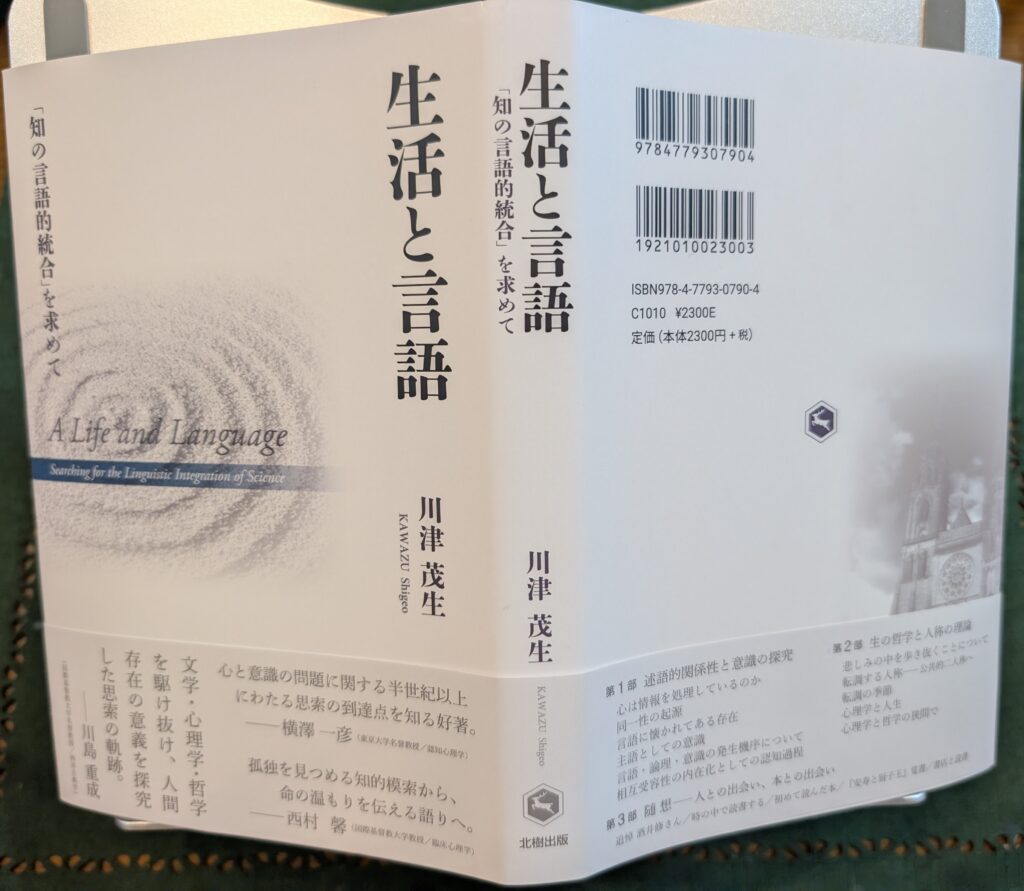
    ついに、第3巻『生活と言語』の見本が、十和田の私の手元に到着しました。 

    まだインクの匂いがしそうな、生まれたての一冊です。 この表紙の向こうに、今日お話しした「脳」と「人生」のクロスオーバーが広がっています。 

    詳しくは、また次回の記事で。 良い週末をお過ごしください。 

    [English Summary] Life’s Modulation: From the Strong “I” to the Receptive “You” 

    Friday Night Philosophy — A Crossover of Life and Meditations 

    Previously, I discussed how grammatical persons shift within the micro-world of neural networks. Tonight, let’s zoom out to the macro-world of “Life.” 

    Just as music modulates from a major key to a minor key, our lives experience shifts in deep underlying moods. I call this the “Season of Modulation” (転調の季節). Underneath these shifts lies a transformation of “Grammatical Person”: 

    • Youthful Vigor: The “Strong 1st Person (I)” leads the way. 
    • Times of Weakness: When the “I” is weakened by life’s hardships, we transform into a “2nd Person (You)” capable of accepting the pain of others (Receptivity). 
    • Maturity: Through these changes, we awaken to the “3rd Person (Objectivity),” accepting our physical limits. 

    My theory serves as a compass for both brain mechanisms and life’s seasons. As I write this… a package has just arrived. My new book, A Life and Language, is finally here in my hands. (See photo above) 

    See you at the next “Crossover.” 

    【著書のご案内 / Books】 この記事で触れた理論とエッセイの詳細は、以下の三部作にて詳しく展開しています。

    1. 『生活と思索:「先駆的二人称」を求めて』 (A Life and Meditation: Searching for “Anticipatory Second Person”) [Amazon][楽天]
    2. 『生活と論理: 人称のロゴスを求めて』 (A Life and Logic: Searching for “logos” of Grammatical Person) [Amazon][楽天]
    3. 『生活と言語:「知の言語的統合」を求めて』 (A Life and Language: Searching for the Linguistic Integration of Science) ※予約受付中 [Amazon] [楽天]

  • 一般人称理論について

    科学と心を繋ぐ「一般人称理論」という挑戦 ──『生活』三部作の軌跡

    1. 初期のアプローチ:対立と調停

    私のこれまでの研究、特に初期の段階では、人生の危機としての「心の病」と、科学の危機としての「脳と意識の問題」が、実は共通して「一人称と三人称の対立」という構造を持っていることを指摘してきました。

    心の病は、生きられる「私(一人称)」と、客観的に観察される「私(三人称)」の間の齟齬から生じます。同様に、意識と脳の問題においても、一人称としての「意識(体験)」を、三人称的な物質である「脳」から説明することは極めて困難です。

    この深い対立を調停するには、一方の立場に加担しない「第三の項」、すなわち媒介者としての「二人称」が必要であると私は主張してきました。

    これは宗教的経験においても同様です。人は根源的虚無を経て、二人称としての「存在」に出会うことで救済されます。そこでは自己救済は原理的に不可能であり、自己を断念し他者へと開かれることを通じて、媒介者としての「先駆的二人称」へと変貌していくのです。

    かつて私は、意識の発生においても、このような先駆的二人称的な母胎が必要であると結論づけました。

    2. なぜ「一般人称理論」が必要だったのか

    しかし、ここで一つの壁に当たります。

    初期の議論では、社会的な実存の葛藤(心の病など)から出発して二人称の必要性を説き、それをそのまま「脳と意識」の問題にも当てはめようとしていました。しかし、「なぜ脳科学の分野でもその枠組みが有効なのか」という点については、必ずしも十分に論証できていなかったのです。

    そこで私は、研究のスタンスを根本から見直すことにしました。

    • 意識の研究: 一人称性を損なわない「現象学」のアプローチ。
    • 脳の研究: 心理学や医学、あるいはAI研究のような「三人称の科学」のアプローチ。

    この二つは、基礎となる人称が全く異なるため、どちらか一方の立場に立つ限り、もう一方を十分に説明できません。

    この行き詰まりを科学や学問として乗り越えるには、それぞれがこだわっている「特殊な立場」を、より一般的な土俵の上で吟味し直す必要があります。

    つまり、現象学(一人称)も科学(三人称)も、一度その特殊な立場から自由になり、すべての人称を検討の俎上に載せて、「人称そのものを一般的に研究する(一般人称理論)」のです。

    そうすることで、一人称も三人称も、より高次の「メタ人称的」な視点から公平に再編成することが可能になります。この手続きを経て初めて、「二人称が媒介になる」という理論も、単なる感想ではなく、科学的な対話に耐えうる意味のある理論として展開可能になるのです。

    3. 新たな困難と、解決への道

    こうして「一般人称理論」という枠組みを構築することで、意識と脳の問題解決に向けた理論的な道筋は見えました。

    しかし、そこから先に進むことが、実は非常に困難であることが次第に判明してきました。

    枠組みとして「二人称の必要性」は導き出せました。しかし、「では、具体的に脳内のどこで、どのように二人称が機能しているのか?」と問われると、答えに詰まってしまうのです。

    物理的な神経回路の中で、意識と脳の媒介としての二人称がどう働いているのか。そのメカニズムの解明は困難を極め、人称理論の採用は、かえってさらなる難問を私に突きつけることになりました。

    この問題の解決の兆しが見え始めるまで、私はかなりの歳月を費やすことになりました。

    その具体的な解決策、すなわち「神経回路と言語」をめぐる新たな展開については、次回のブログで書くことにします。

    一言だけ付け加えるなら、これら私の思索の変遷と格闘の軌跡は、以下の三部作にすべて記述してあります。

    • 第1巻『生活と思索:「先駆的二人称」を求めて』
    • 第2巻『生活と論理:人称のロゴスを求めて』
    • 第3巻『生活と言語:「知の言語的統合」を求めて』(2025年12月刊行予定)

    この第3巻が、長きにわたるわたしの問いの「完結編」であり、そこにおいて一応の解決に到達しています。


    English Summary

    Toward a General Theory of Grammatical Person: Bridging the Gap between Mind and Brain

    This article outlines the trajectory of my philosophical inquiry, which culminates in my upcoming book, A Life and Language: Searching for the Linguistic Integration of Science (Vol. 3).

    Initially, I identified a common structure underlying both the existential crisis of mental illness and the scientific crisis of the mind-body problem: the deep conflict between the First-Person perspective (lived experience/phenomenology) and the Third-Person perspective (objective observation/science). To resolve this dichotomy, I proposed the necessity of the “Second Person” as a mediator. In existential terms, this manifests as the “Anticipatory Second Person,” which emerges when one transcends the desire for self-salvation to focus on the salvation of others.

    However, applying this concept to the scientific problem of consciousness and the brain required a more rigorous framework. Simply asserting the importance of the “Second Person” is insufficient to explain how subjective consciousness arises from the material brain.

    To address this, I developed the “General Person Theory” (General Theory of Grammatical Person). This approach requires us to step back from the specific, entrenched stances of phenomenology (purely first-person) and science (purely third-person). By examining “personhood” from a meta-level, general perspective, we can place all grammatical persons on a fair and equal theoretical footing.

    While this General Theory successfully validated the structural necessity of the Second Person as a mediator, a difficult question remained: How exactly does the Second Person function within the neural circuits of the brain?

    The theoretical framework was complete, but the concrete mechanism of how neural activities (third-person) are mediated to generate consciousness (first-person) remained elusive for many years. The solution to this final puzzle—involving the linguistic interpretation of neural network dynamics—is fully detailed in the concluding volume of my trilogy, 『生活と言語:「知の言語的統合」を求めて』(“A Life and Language: Searching for the Linguistic Integration of Science”), to be published in December 2025.


    【著書のご案内 / Books】

    1. 『生活と思索:「先駆的二人称」を求めて』 (A Life and Meditation: Searching for “Anticipatory Second Person”) [Amazon] [楽天]

    2. 『生活と論理:人称のロゴスを求めて』 (A Life and Logic: Searching for “logos” of Grammatical Person) [Amazon] [楽天]

    3. 『生活と言語:「知の言語的統合」を求めて』 (A Life and Language: Searching for the Linguistic Integration of Science) ※予約受付中 [Amazon] [楽天]

  • ホームページ作成に当たって

    この度研究の紹介と発信を中心としたホームページを始めるに当たって、動機や背景にある考えなどを、述べておくことにします。

    わたしのこれまでの研究は、古からの心理学者の知人二人が、たまたま偶然に、全く別の機会であったが言ってくれた、私の研究に対する一言の感想が、その性格をかなり的確に描写してくれているように思っています。彼らは、二人とも心理学者です。一人は認知心理学者で、もう一人は臨床心理学者です。そして、お互いには、おそらく交流はほとんどなく、しかしわたしとのつながりは、長年にわたっていました。

    彼らは、まったく違うシチュエーションで、時期も2、3年はずれていたと思いますが、偶然まったく同じ感想を述べてくれました。彼らはそれぞれ自分の言葉で、「川津さんの研究は、若い時から、ずっと一貫しているね。」と言ってくれたのです。

    私の研究歴は、論文や発表のタイトルを見ただけでは、研究のメインストリームからかなり外れたところで、自分の好きなテーマを、半ば自己流に発表をしてきたとしか見られかねないような、外見をしています。しかし、実は、私自身は、ずっと若い時期から、まったく同じテーマを、どうしても現在の研究の主流の方向性とは同調関係に入れないような形で、已むにやまれぬ自己の探求心に導かれ、いわば強引に引っ張れたというか、あるいは、どうしても立ち向かって行かざるを得ないと感じる目標を目指して、実存的な危機感の中で慄きつつ突っ走ってきたのです。

    ですから、この二人の旧知の心理学者の知人は、何の気無しに言った批評であったかもしれませんが、しかし、その言葉は、わたしの研究人生の実存的な一貫性を、見事に見抜いてくれていたのです。それは、内心とても嬉しいことでした。

    ではどのように私の研究が一貫しているのかというと、心理学的には意識と脳の問題とも言えるが、しかし、その問題が、単なる科学的な問題としてではなく、人間存在の意味や価値の問題とも深く関わった形で、その問題を問うというのが、わたしにとっては一貫したテーマでした。心理学的には情報処理心理学の枠組みの中で、単に科学的な研究が進歩していけば、ついには解決するに違いない問題だと、多くの若者は学校で学ぶかもしれません。

    しかし、情報処理とはコンピュテーションの原理をモデルにした考え方です。コンピュータとは、チューリングマシンを実現化したフォンノイマン型コンピュータに代表されるように、0と1のバイナリーなディジットを操作することで、論理計算をする機械です。脳が生物学的な計算機だと考えることは、それと同じ方式ではないとしても、似たような形で、要するに計算をしていると理解することです。その後並列分散処理の考え方が提出されたので、計算のイメージが変化しました。しかし、並列分散処理の計算をするマシンも原理的には、コンピュテーションを行っています。この研究の方式で、人間の認知処理に極めて近い機能が作成できることは論を待ちません。論理計算というのは、ある意味万能なのですから、それによって、人間の知性がシミュレートできるのは、当然であるとも言えるでしょう。

    一方で、もし人間の知性が、たんに計算をしている生物学的な機械なのだとしたら、その理解によって、何らかの重要な生命的なもの、あるいは生きる意味につながる大切なものが欠損してしまうのではないかという、危機感もありえます。そのような生命的な部分や感情や価値観なども含めて、計算による論理的処理で説明が可能であると、多くの心理学者や生物学者は言うでしょう。

    この部分、すなわち生命的なもの、感情や価値観にもつながる生命的なものが、本当に論理計算によって説明可能なのだろうか、という現代では忘れられかけている疑問を、心理学の中心にある情報処理の考え方にチャレンジすることで、乗り越えられないだろうかというのが、わたしの一貫した研究テーマでした。この問題については、多くの哲学者が科学的な心理学を批判していると思いますが、情報処理という心理学の理論的核心について、正面からチャレンジすることはなかなかできていないように見えます。批判するのであれば、批判の対象となっている理論の核心部分について、その問題点を指摘するだけでなく、それに代わる新たな理論を提出する必要があります。

    数十年の研究を経て、わたしが近年到達した考え方が、特徴統合の言語(学)的再解釈による、ニューラルネットの新たな理論的枠組です。特徴統合が、〈述語=特徴〉が〈主語=表象〉によって統合されると理解すると、〈文=主語・述語結合〉は時間的に後から成立することになり、〈文〉からの〈命題〉の抽出、さらにそこからの〈論理〉の構築は、後発的になります。この理論によって、脳が、論理の手前の述語性のみの段階から主語による統合の段階へ向かうプロセスを反復していると想定できます。それはあたかも、論理の手前で、いわば場面的な述語性のステージから主語の探索を経て文を作っていくという、詩人の創作にも似たプロセスを脳がしていると理解することになります。これにより、現象学とも調和的な認知過程の理論が形成できるのではないかと考えられます。

    私は情報処理の核心に切り込んでいき、それを述語性を基盤とする生命哲学、たとえば西田哲学やハイデガーの哲学とも調和する理論へと、変貌させることを目指してきました。こうした言語(学)的再解釈に基づく考え方によって、生命的で倫理的な思考を可能とするニューラルネットの理論構築にも、一定の寄与できるのではないかと考えています。

    このような高齢者らしからぬ熱き思いをもって、研究の発信を目的としたホームページを作成することにしました。

    わたしのこれまでの研究の流れについては、以下の2つの著作を参考にしてください。

    • 生活と思索-「先駆的二人称」を求めて 北樹出版 2017
    • 生活と論理-人称のロゴスを求めて 北樹出版 2020

    ーーーーーーーーーーーーーーーーーー

    English Summary:

    Two of my longtime friends, both psychologists—one a cognitive psychologist and the other a clinical psychologist—made a surprising observation. Independently and years apart, they both told me the same thing: “Your research has been consistently focused from a young age.” On the surface, my research might seem unfocused and drifting over various topics, but deep down, I’ve always been driven by a single core theme, one that has guided me through an existential quest.

    This consistent theme is the problem of consciousness and the brain. However, for me, it’s not just a scientific puzzle; it’s a profound question about the meaning and value of human existence. I’ve always felt a sense of crisis with the dominant information-processing model in psychology, which treats the brain as a biological computer based on logical computation. My concern is that this view might be missing something crucial—the very essence of life, emotion, and values.

    Over several decades, I’ve worked to build a new theoretical framework to address this. My recent work offers a linguistic reinterpretation of feature integration theory. I propose that the brain repeatedly moves from a pre-logical state of predicative features to a stage where a subject integrates them. This process is like a poet creating a sentence from a list of words, which allows for a theory of cognitive processes that is in harmony with phenomenology.

    I believe this approach can transform the core of information processing psychology into a philosophy of life grounded in predicativity, one that aligns with philosophies like those of the Kyoto School, Kitaro Nishida, and Martin Heidegger. I hope this perspective will contribute to a neural network theory that can account for ethical and living thought.

    This homepage is a way for me to share this passion. For more details on my research journey, please refer to my two previous books, A Life and Meditation: Searching for “Anticipatory Second Person (生活と思索:「先駆的二人称」を求めて) and A Life and Logic: Searching for “λόγος” of Grammatical Person(生活と論理:人称のロゴスを求めて).